HR+, HER2- Metastatic Breast Cancer
Disease State Overview
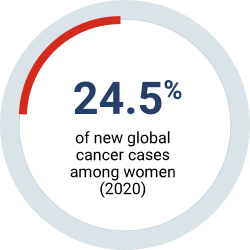
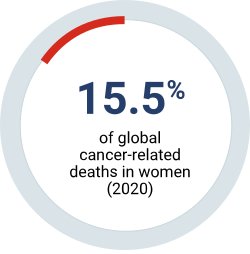
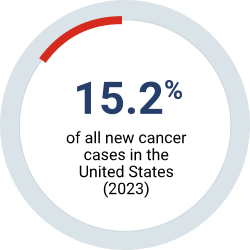
Breast cancer is the most commonly diagnosed carcinoma and leading cause of tumor-related deaths among women worldwide.1-2 Below are some breast cancer statistics.1-2
Breast Cancer Accounts For:
Metastatic Breast Cancer: Introduction
- There are over 150,000 women in the United States living with metastatic disease5,6



- MBC is incurable, and therapeutic goals are mostly palliative9,10
Breast cancer is grouped into subtypes based on hormone receptor (HR) status (estrogen receptor [ER] and progesterone receptor [PgR]) and presence or absence of human epidermal growth factor receptor 2 (HER2) overexpression.11

Incidence of MBC by Subtype Among US Patients (SEER 2010 Data)
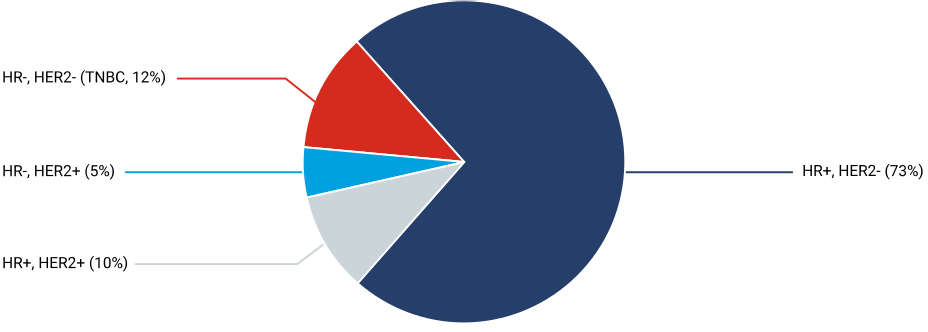
Incidence of MBC by subtype among US patients12:
- HR+, HER2- (73%)
- HR-, HER2- (TNBC, 12%)
- HR+, HER2+ (10%)
- HR-, HER2+ (5%)
Breast Cancer—Specific Survival Curves for Stage 4 Disease by Molecular Subtypes
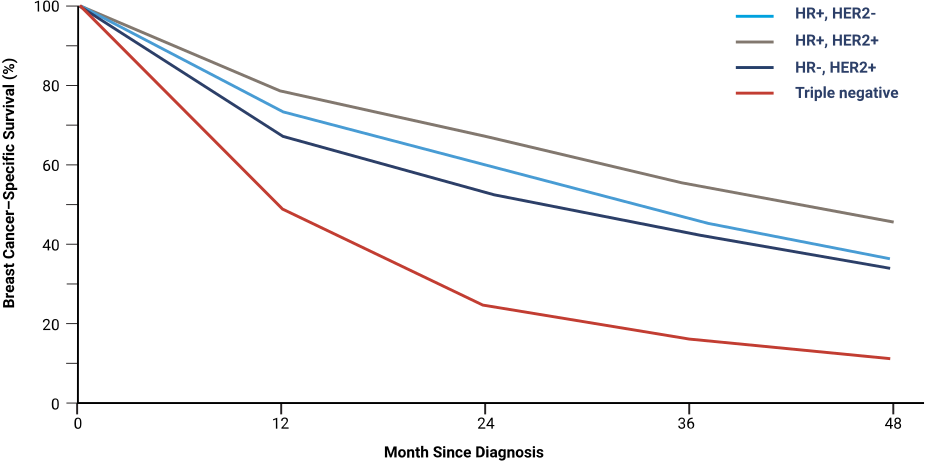
Breast cancer-specific survival curves for Stage 4 disease by molecular subtypes. X-axis displays months since diagnosis, from 0 months to 48 months, and Y-axis displays breast cancer–specific survival, from 0% to 100%. All molecular subtypes begin at 100% survival rate at 0 months with a gradual decline until 48 months. At 48 months, patients with HR-positive, HER2-positive subtype displayed the best survival rate at 45.5%, followed by HR-positive, HER2-negative at 35.9%, then HR-negative, HER2-positive at 33.9%, and finally worst survival rate was reported for the triple-negative subtype at 11.2%.13
Molecular Subtypes of Breast Cancer
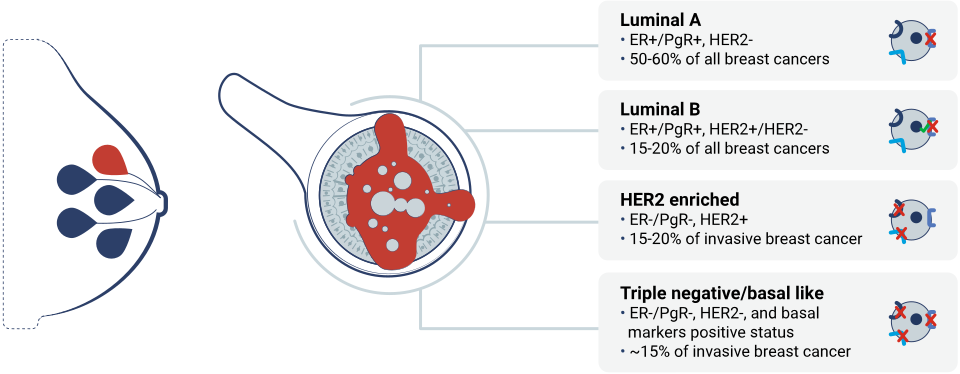
Luminal A breast cancer, which displays ER-positive or PgR-positive and HER2-negative status, constitutes 50-60% of all breast cancers. Luminal B breast cancer, which displays ER-positive or PgR-positive and HER2-positive or HER2-negative status, constitutes 15-20% of all breast cancers. HER2-enriched breast cancer, which displays ER-negative or PgR-negative and HER2-positive status, constitutes 15-20% of invasive breast cancer. Triple negative/basal like breast cancer, which displays ER-negative or PgR-negative, HER2-negative, and basal markers positive status, constitutes approximately 15% of invasive breast cancer.14-16

HR+, HER2- is the most common subtype of MBC, accounting for 73% of all cases.12 As healthcare providers, it is important to understand the MBC subtypes and how they may be used to guide treatment decisions. Please see the related resources below for additional information on MBC.
References
- Sung H, et al. CA Cancer J Clin. 2021;71(3):209-249.
- https://seer.cancer.gov/statfacts/html/breast.html. (Accessed March 21, 2024).
- https://www.breastcancer.org/types/male-breast-cancer. (Accessed October 27, 2023).
- https://www.stopbreastcancer.org/wp-content/uploads/2024/01/2024-Breast-Cancer-Facts-Figs.pdf. (Accessed April 30, 2024).
- Mariotto AB, et al. Cancer Epidemiol Biomarkers Prev. 2017;26(6):809-815.
- Mayer M, Grober S. Silent Voices: Advanced Breast Cancer Needs Assessment Survey Report. 2006.
- Nelson DR, et al. PLoS One. 2022;17(2):e0264637.
- Daily K, et al. Clin Breast Cancer. 2021;21(4):302-308.
- Cardoso F, et al. Ann Oncol. 2018;29(8):1634-1657.
- Irvin W Jr, et al. Oncologist. 2011;16(9):1203-1214.
- https://seer.cancer.gov/statfacts/html/breast-subtypes.html. (Accessed October 27, 2023).
- Howlader N, et al. J Natl Cancer Inst. 2014;106(5):dju055.
- Howlander N, et al. Cancer Epidemiol Biomarkers Prev. 2018;27(6):619-626.
- Feng Y, et al. Genes Dis. 2018;5(2):77-106.
- Eliyatkin N, et al. J Breast Health. 2015;11(2):59-66.
- Yersai O, Barutca S. World J Clin Oncol. 2014;5(3):412-424.
VV-MED-157398
Please rate your satisfaction with the content on the following statements:
Very Dissatisfied
Dissatisfied
Neutral
Satisfied
Very Satisfied