Hi, my name is Dr. Michelle Look and I'm a family physician, sports medicine, and obesity medicine physician in San Diego. We are here today to explore how to discuss obesity with your patients. You know, most patients come to see their primary care physician without making appointments specifically to discuss their weight. And I hear colleagues of mine express apprehension with bringing up or approaching the subject of their weight. And I really think that this is a shame because primary care providers are in a unique position because of their relationship and their continuity of care to really help patients with obesity.
These are my disclosures.
You know, it's not uncommon for us to see a patient like Roger. Roger is 57 and he's coming in for his annual physical exam. His height and weight show that he has an elevated BMI of 34.5 and an elevated waist circumference of 43 inches. He has a family history of obesity, and he tells me, I used to really enjoy hiking and biking before I gained so much weight. Just by looking at Roger's chart, we're able to get a bit of weight history. Just by looking at his vital signs, we see at 15 years ago at the age of 42, his BMI was 23.5. Then he sustained an ankle or foot fracture, and this led him to have to stay home. He was resting and within a year, his BMI had increased to 28 and he transitioned his work to being more at home. Over the next few years, his weight continued to increase and then we know that the age of 45, his BMI had gone up to 34 and he said, "You know, I couldn't keep up with my friends, hiking or biking. I couldn't do the things that I used to like to do, and I was embarrassed, so I stopped hanging out with that group." Over the next 10 years, his weight has gone up and down. We saw him at the age of 55 and at that time, he had made another serious attempt, even going into a commercial program to lose weight. He says, "I was able to lose weight by really focusing on my diet." Now, two years later, he says, "You know, I fell off the wagon. I wasn't able to maintain that weight loss and now his BMI is elevated at 34.5." It's clear in looking at his weight trend that his diagnosis of obesity and his weight is something that should be addressed at this visit, but too often, it unfortunately goes unaddressed. Colleagues express that they don't know where to start. They don't know how to bring the subject up. It's true that weight can be a very personal and sometimes sensitive subject topic to bring up.
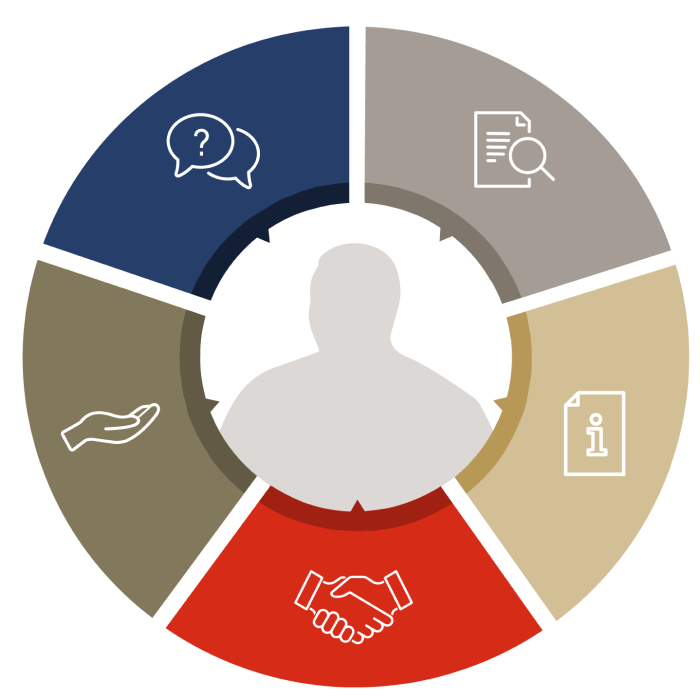
I encourage you to look at using the five A's. The five A's were developed by the National Cancer Institute to assist providers in counselling smoking cessation. This has been adopted to assist in discussing weight management and the disease of obesity. So, the five A's are A for Ask, ask permission to discuss weight, and then Assess. Assess obesity-related risk and potential root causes and gain. Advise on health risks and treatment options. Agree on health outcomes and behavioural goals. And then finally, to help assist the patient in other resources as well as follow-up.
When we discuss our patient's weight, we want to use words that are both respectful and free of judgment. I think it's important for us to remember that for many of our patients, they have experienced a traumatic experience, perhaps with their health care provider or their family member, and there's weight bias. Weight bias is negative attitudes towards patients because of their weight. And this shame, this blame, this trauma can really affect your conversation. And so, by using respectful terms, you can improve your communication with the patient because words matter. So, we would encourage to use people-first language. It might be helpful to say, instead of an obese patient, that a patient with obesity. Just like we would when we discuss other chronic diseases like a patient with cancer or a patient with diabetes. In fact, I think about trying to get the word obese out of your vocabulary. And this is something that takes time. It takes practice. It's something that doesn't often come naturally initially. But especially words like obese patient or even morbidly obese, they can be very insulting language. It's unfortunate that it still is in our coding, in our IC10, and sometimes will show up on your after-visit summary or instructions or billing to patients. And so, we want to make sure that we're expressing words that may be more comfortable for patients. I'd encourage considering words such as an elevated BMI or unhealthy weight or higher weight. This helps put the patient more at ease and express a comfort with regards to discussing their weight.
So, let's talk about how do we start the conversation, right?
And so, the first A is Ask. And I'd like to consider asking a patient if you can discuss their weight. I like to start patients by saying things like, "You know, I've noticed that your weight has been increasing over the years. I'm concerned about how your weight could be affecting your health. Is that something that concerns you? Is that something that you would like to discuss today?" You know, by asking, this puts the patient in control of the conversation. Again, I have to say that this is something that came naturally, right? In fact, how often do we ask a patient if we can discuss their abnormal liver test? Or do we ask a patient that we can discuss their elevated blood pressure? But in discussing with a lot of patients of mine with obesity and the research that we have in talking to patients with obesity, it's clear that many patients have been traumatized, shamed for their weight, blamed for their weight. And so, thinking about putting it in the perspective of a trauma patient when you address the subject can help for your therapeutic relationship. It establishes a rapport and lets you to move forward. So maybe consider things, phrases like, "Would it be okay if we discussed your weight?" You know, open-ended phrases like, "I'd like to understand more about how you can incorporate physical activity into your life. Tell me a little bit about what you do and what your day is like in terms of movement." Or even looking at motivational interviewing questions such as, "On a scale of one to ten, how important is discussing your weight today?" Because perhaps it's not. These statements can really get permission to go forward and discuss a subject that may be difficult for them to discuss.
So, we use an approach that's called OARS, and that is using open-ended questions, affirming positive talk and behaviour, reflecting on what you've been hearing, and then summarizing again what has been said. So, the next A is assess.
Recall that body mass index is just a screening tool. There are so many ways that body mass index may not accurately reflect the effect of a patient's weight on their health. We know that it can be helpful in population data, but not individual risk because it doesn't look at sex, gender, stage of life, or even ethnicity and bone structure, right? So, we want to try to collect further information. So, assess is getting more information so we can assess how their weight is affecting their health. Other things that can be helpful are waist circumference or waist hip ratio, or if available to you, body composition, because it's not just weight, it's really excess adipose tissue, and in particular, adipose tissue on your organs, which we call visceral adipose tissue, that is more predictive of how their weight is going to affect their health and their long-term health. We want to look at obesity-related complications. Many patients may be aware of such as hypertension, type 2 diabetes, but there could be other complications that patients are not aware of. In my practice, I like to use a sleep screen to look for obstructive sleep apnoea, and I also use an eating disorder screen, so simple set questions that can help a patient recognize how their weight is affecting their health, and looking at their medications, and how medications could be affecting their health as well. And then let's look at mental health. We talk about how our patient was embarrassed to do further activities because of his size, and so we look at not only mental health but weight stigma, and especially internal weight stigma or internal weight bias. By looking further at body composition, complications, physical complications, how their weight is affecting their movement, and then their mental health or psychosocial factors, we can more accurately grade the severity of their obesity and not just by their BMI. And this is more predictive of a patient's long-term health, and it also helps to guide us on our possible treatment options.
And the next A is Advise. So, we assessed some data from Roger, right? We said, you know, he has a BMI, and it turns out that he actually is on lisinopril and has hypertension. He's got an abnormal A1c of 6.1%. So, A for Advice is when we really want to educate Roger on how his weight is affecting his health. In particular, not just his weight, but excess adipose tissue can be contributing to his complications. This is also the time for us to talk about how not only is it affecting his weight, but how weight loss can improve many of his complications and medications that he may be on. Most importantly, this is when we want to educate our patients on how obesity is a chronic disease. In the last few decades, we have really improved our understanding that obesity is a disease, and it's quite complex. We want to explain to our patients that there's a very strong genetic component, which we know Roger has, strong family history. And then this is influenced by our current environment. And we like to think about it as just one thing, his ankle fracture, but we know that there are many factors involved in affecting the gene for obesity. It is the change in his activity. It is a change in his work status. It is how we are more sedentary than we were before. It's the access to food. It's also the quality of food we have, the processing of food. It's even the amount of sleep that we're getting and the stress that we're under. All of these environmental factors, including medications patients could be put on, and stress that affect the way the brain responds to weight loss. And so now, when a patient may lose weight, the brain, and the body fight back to pull the patient back to the weight that they were saying, "No, no, no. It's not a good thing to lose weight. We want to gain the weight back." It's so important for patients to be advised that this is not their fault. This is something that is controlled by their body, and it's not under their conscious control. And there's one thing I emphasize, is that obesity is a chronic disease, and it's treatable. So, when I go over just like other chronic diseases, we need a comprehensive approach to treat your disease obesity. And that, of course, includes lifestyle. And lifestyle is very important, such as things like a healthy eating plan or increasing physical activity. It may also involve behaviour modification and support. But it's like other diseases, we need to treat the actual pathophysiology of obesity, and that may involve pharmacotherapy and bariatric surgery. This is a long-standing chronic disease, and so treatment needs to be long-standing. And so, the importance of long-term treatment and incorporating all aspects of treatment tools that we have available is important to affect their disease.
I like to tell patients about how it's not just their weight but specify that we have an understanding that it's the extra adipose tissue that really can affect their health, increasing the risk of metabolic disease. And not just type 2 diabetes, but it's that adipose tissue on your heart that can affect heart disease. It's the adipose tissue in your tongue that can affect sleep apnoea and other end-stage organ disease, like kidney disease, fatty liver, and other heart disease. And so, it's not only that the fat contributes to these complications, but by reducing adipose tissue, even by small amounts, we can have a dramatic effect on their overall health and their other metabolic disorders.
Once we've taught our patients and advised them about the treatment and the options for the chronic disease obesity, the next A is for us to agree on a treatment plan. And that's an important A, agree, because it's so important that a patient's treatment plan is individualized and something that they have agreed upon. When we have a collaborative goal, the patient is going to be more successful if they have buy-in and it's what they think is the right thing for them. This sometimes can be something that does not happen easily. We think of agree as very respectful negotiation. I like to ask my patient, what would you like to do to treat your disease? What would be important for you to attain? What is a goal that we can do? And this sometimes is not done in just one visit. It may take multiple visits and multiple discussions. Often, our patient is not on the same page as the healthcare provider, even though we have discussed that the treatment can be very effective with new, very effective treatment goals, sorry, treatment tools such as pharmacotherapy or bariatric surgery. Our patient may not be there yet. And so, it comes to us to pull back and look at what their goals are. And this is where negotiation can come into play. I often will have a patient that even though I would like to start using some of the new pharmacotherapy, they are not interested at this time. And so, we'll set a goal, and we'll say, I think that lifestyle is a great place for us to start. Let's talk about how we can intensify things that you have done, but let's both agree that we're going to look back and set a timeline. And if we have not reached the health goals or moving forward in our treatment plan, that we will re-discuss our treatment options. And often this is a way to show that the patient is very involved in their treatment plan and that I respect their needs and their wants. So, then I like to say, let's set a weight loss goal. And when I say a weight loss goal, we know the first thing patients will say, well, you know, I was 145 pounds when I was in college. And so, my goal is to be 145 pounds. I know that patients really want weight loss. And so, I try to pull patients to choose goals that don't involve only weight loss numbers for multiple reasons. One, we want them to be smart goals. Smart goals are things that are very specific and measurable and achievable and relevant, or we also say realistic. And so sometimes numbers may not be realistic. And it's our advice to set some goals that may be realistic. I often will say, you know, I hear what you're saying with your weight loss goals. And we will talk about this and look at that, you know, but we use weight really only as a biomarker to see how we're doing with our treatment plan and whether it's enough to meet our health needs or needs to be intensified. Let's look at other ways to define success, besides only just the number on the scale. The other reason is because we want things that a patient can actually achieve. And I will tell you that if a patient has not met that set number on the scale, by the time your appointment comes around, you will see many cancellations. And that's the last thing we want in building our treatment plan and moving forward. And so, I ask patients, let's talk about other health goals. And I pull them back to our first conversation of really assessing how their weight has affected their health, perhaps with their complications, perhaps with how their weight has been affecting their life. And pulling that to feel like could we set a goal that is going to affect your health? And so here again, is when we use those OARS techniques of using open-ended questions. And so, I may ask our patient, can you think of a goal that might help you improve your health? Something that you think you could do that could help improve your health?
With Roger, here's that OARS, right? So, we're agreeing and we're going to use an open-ended question. How can we improve your health? Roger says, "Oh man, I really loved it. When I was hiking and biking with my friends, it was so fun. I felt so good about myself. That was a great time in my life, and I miss it." This is the time where we can affirm and we say, "That's a great goal. I think increasing physical activity is a great goal for you. And I hear how happy you were when you were really active. So how could we go forward? How do you think that you could increase your physical activity?"
How important is increasing physical activity to you? And he might, Roger might say, "Oh, it's a 10. I am serious this time. I am going to increase my physical activity." And so, we assess their readiness. And then how confident are you that you can increase your physical activity? And actually, Roger might say, "Actually maybe a two." Really? Well, this is interesting. Why is there such a disconnect and something that you feel is really important? It's like, you know, I just don't have time to be active. You know, I want to, but I'm working so much I have no time to increase activity.
And this is where we can help Roger by negotiating and getting him to really specify his goal. The more detail he has in setting his plan, we know the more successful he will be. So, we want his plan to be very specific. So maybe we can brainstorm. Are there any days that you actually do leave work on time? Actually, yeah, there are days that I have to go pick up my son and I take him to soccer practice. Huh. Well, that's a good time. Do you think that that could be a time where you could do some physical activity after you drop him off at soccer practice? Absolutely. I could do that. That's a good time. Well, we want it to be specific. How would we get you to be successful at doing physical activity at the soccer? What would you need to do so? Do you have clothes? I need shoes, right? You need your shoes. So perhaps we need to make sure that your shoes are in your car the morning that you leave on the days that you are going to take your son to soccer practice. What days are those? Monday, Wednesday, Friday. Okay. So, three days. Do you think you can do three days? And this is where the negotiation. I'm going to do it every day. You think you can do all days? Well, no, maybe not. Maybe three days a week. I can try to increase activity. And here's that negotiation. Great. So, three days a week, you're going to put your shoes in your car so that you can go and do some exercise while your son is at soccer practice. How about we actually have you write that down and log the days that you do?
I know that being more active is something that's important to you and you've expressed how it makes you feel. And it's a great goal for us to move. So, I'm going to write that down for us. And so that the next time that you come and see, I'm going to hold you to that commitment of putting your shoes in your car and exercising while your son is at soccer practice. Let's set a follow up appointment so you and I can review and see if that works. But more importantly, Roger, I think this is a great goal. I really want him to know that if this doesn't work, this is something for us to discuss. So, I still want you to come back, even if it doesn't work, because perhaps we can find another way to make you more successful in meeting this goal.
I think that this is a time when we can set these SMART goals and set up an environment that whether a patient loses weight or whether they're physically active or whether he is able to exercise even one day a week, that we can come back and look at the barriers that might have affected his success. Perhaps he comes back and says, you know, the reality is as much as I want to, I am so stressed out. Most of the time after I dropped him off at soccer, I just sat in my car, and I took a nap while he practiced. Or if I did go and watch him, I just stress ate on the bench with other parents. And I really wasn't active at all. You know, we want to identify these barriers and tell Roger, it's great that we were to figure out that what has stopped you from reaching our goal. And that's okay. It's obvious that you're under a lot of stress. And we need to address this so that we can move forward with our treatment plan. So, identifying this is moving forward. And so perhaps we should recommend that you see a mental health provider to address some of your stress. You know that stress and not sleeping well can really affect your body's ability to lose weight. Those elevated cortisol levels put our body back into that fight flight system and it makes those body hang on to every calorie that you eat and even increase food cravings. So, what you're saying is completely supported and validated by our data as well. So, this is where we can recommend and assist in patients in overcoming some of these barriers. You know, we're finding either online sources or colleagues in your area that might be able to assist them moving forward. Two things I really want to emphasize, just because we identify a barrier, I would encourage you not to feel compelled that you need to address every single one of these barriers at the time of the visit. Chunk it up, break it down, make it into more reasonable portions. We do this with other chronic diseases like diabetes. We don't address every part of diabetes care at every visit. It's similar with obesity. And also think about what things work for you. You may not be comfortable with addressing how to improve his stress. And so that's a perfect time to use your resources in your community. Don't feel you need to address everything all at one visit. Break it down and use your resources.
So, as we think about what works for you, remember the five A's is just a framework to help lead your discussion. But you may not need all five A's. That might not work for your practice. If you only have time to do one A, I would encourage you to ask your patients if you can discuss their weight and discuss their disease of obesity. But perhaps that's all that fits for you. One A. And that's okay. You brought up the subject. You have planted the seed. Just like we did with smoking cessation where we say, you know, I think that you should quit smoking. Similarly, I'm concerned that your weight is affecting your health. And perhaps this has planted the seed, and the patient will be willing or go to other resources to address it further. Perhaps you have only time to ask and maybe say, let's get more information. Let's order some labs, request some records and let's assess how your weight is affecting you and discuss it at another visit. I would be the biggest proponent to try to set a separate obesity only appointment with your patient and not try to do all your checklists at one time. That can be really helpful to take the stress off of you to also give a patient time to reflect and think about what questions they have. Perhaps you could just only advise them that, hey, obesity is a chronic disease, and it deserves long term treatment. And so, some of the patient's internal bias may be able to come out and they can say, I've been wanting to get treatment, but I felt like I was cheating. I felt like it was the wrong thing that I should be able to do this on my own. Right? Everyone says, oh boy, if I just ate less and moved more, I wouldn't have this problem. And that's what I thought. I already know what to do. So, I haven't sought treatment, but advising them that this is a chronic disease and it's not your fault. And especially that we have effective treatment for your disease, just as we do with other diseases and it should be approached that way, can go a long way for helping the patient, perhaps at another visit. And we can agree that let's set up another appointment. Or we just ask, and we refer, perhaps to an obesity medicine specialist in your community. This really is something that needs to fit with your practice and where the patient has comfort at this time as well. But you know, primary care providers, we have this unique relationship with our patients, and they trust us over and over. Studies have shown that patients want their primary care provider to bring up the subject with weight, that they know that their weight is an issue and they've tried multiple times to lose weight on their own. And they may be frustrated. Frustrated not only that we haven't brought it up or that there's not treatment or that it's not easy or fair but frustrated with themselves that they have not been successful. And so, bringing up the conversation, taking that risk, it takes practice, but it can be done. Thank you so much for sharing your time with me today. And I hope that the next time you will discuss obesity with your patient.